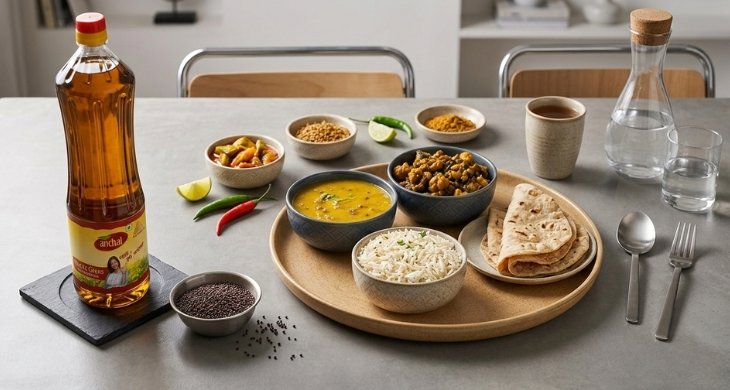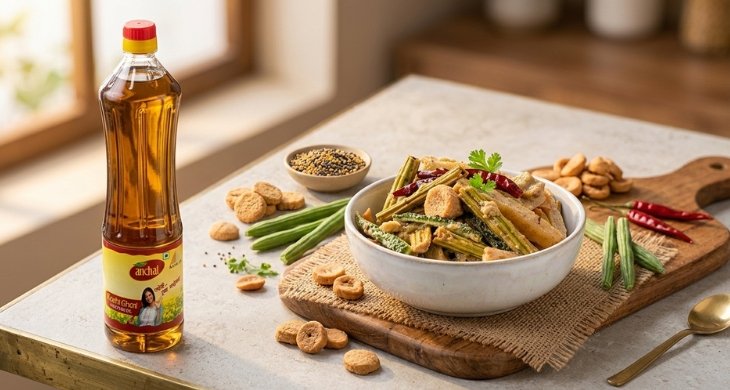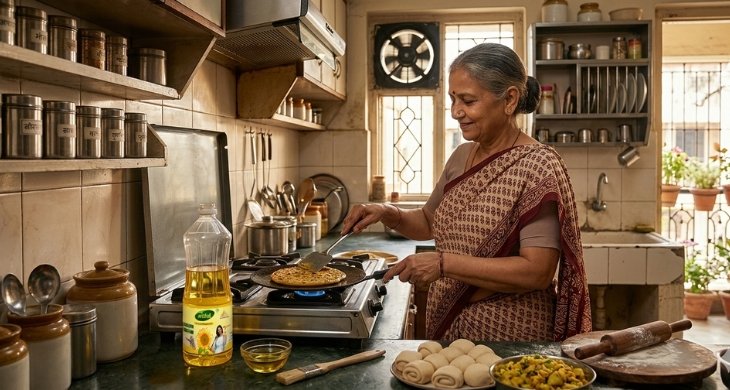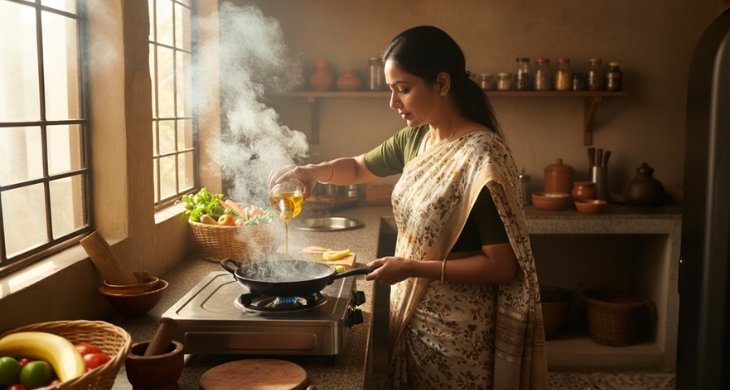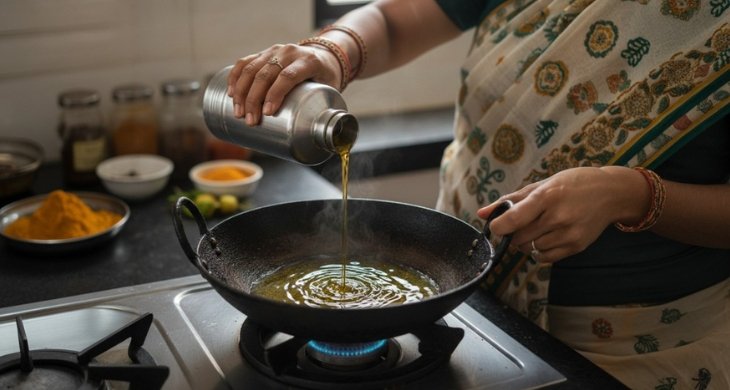

Remember that morning desi aroma? Parathas fried in mustard oil by your grandmother’s hands, filling the whole house with its sharp, bold fragrance. She would say, “यही तेल ताकत देता है, हड्डी मजबूत करता है।.”
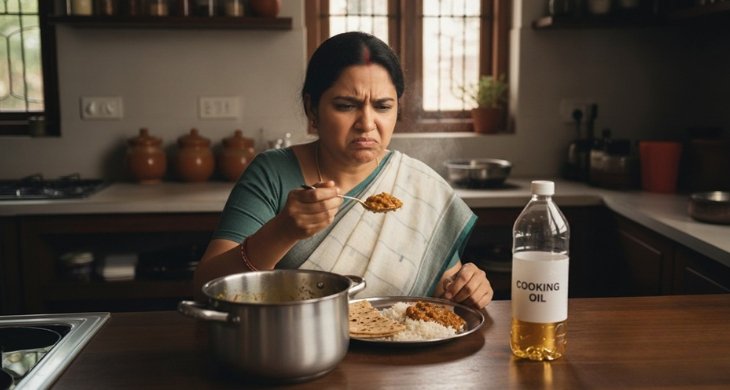
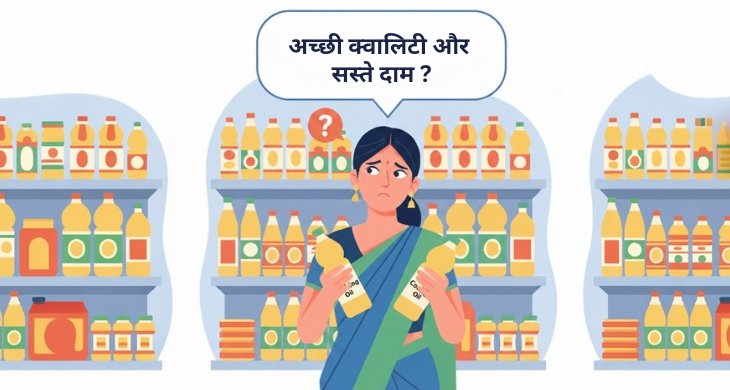
Today, you stand in the supermarket aisle. On one side, the same old mustard oil. On the other, bottles with labels screaming “blended for good health”, “Gut healthy” and “Heart-Friendly.” A question lingers in your mind: Was Dadi wrong? Or has science left traditional wisdom behind?
The truth is, neither dadi was entirely wrong, nor is science entirely right. Real wisdom lies in building a bridge between these two worlds. And that’s where the secret to your kitchen’s health and taste lies hidden.
Dadi Knew This Before Google Did
Modern nutritionists and dadi’s kitchen wisdom finally agree on one thing: “Oil Rotation.”
- Dadi’s Way: Different oils for different seasons and different dishes. Lighter oils in summer, warming oils in winter. Mustard oil for pickles, ghee for roti, regular oil for frying.
- Science’s Take: No single oil can provide all nutrients. Mustard oil has Omega-3, sunflower oil has Omega-6, and soybean oil offers a balance. Every oil has its smoke point (the temperature at which it starts to burn). Using one oil for everything can be harmful.
How to Do It Right: This doesn’t mean stocking 5 different oils. It means a smart selection of 2-3 oils: one for high-heat frying (sunflower/soybean), one for tempering and flavor (mustard), and one for salads.
Dadi’s Remedy: When to Trust It, When to Update It
Traditional wisdom is based on centuries of experience, but our lifestyle and environment have changed.
Trust It When It Comes To…
- Digestion & Taste: Mustard oil is traditionally known to activate digestive enzymes and enhance food’s flavor. Science agrees its pungent aroma stimulates appetite, and its antimicrobial properties help preserve pickles.
- Eating According to Seasons: Using mustard oil in winters was a logical way to provide warmth to the body.
- Don’t reheat same oil: In the old days, people did not fry food every day. They mostly fried only during special occasions. They also did a lot of physical work, so they needed more energy. Today, we often heat the same oil again and again. This is not healthy. When you heat oil too many times, it can break down and become harmful. For regular cooking, using oils that can handle higher heat, like soybean and sunflower oil, is safer.
- Heart Health: If there’s a family history of heart conditions, focusing on a balance of saturated and unsaturated fats is crucial, rather than relying on just one oil.
Some common oils used for oil pulling are coconut, sesame, and sunflower oil. Coconut oil is known for its antimicrobial properties, while others are rich in antioxidants.
The ‘Balanced Oil Rotation’ Plan for Your Kitchen
This rotation is the perfect compromise between traditional taste and modern health. Adapt it to your needs:
1. The King of Flavor & Ayurvedic Properties (Mustard Oil):
- Use For: Tempering (tadka), pickles, winter vegetables, roasted meat or paneer.
- Science Says:
Mustard oil has omega-3 fats that can help reduce inflammation and support heart health. It has a medium smoke point, so it is good for slow cooking but should not be heated too much. PMC
For more information about how omega-3 fatty acids help the body, see the article by the National Library of Medicine: Glucosinolates and Omega-3 Fatty Acids from Mustard Seeds. PMC
2. The Champion of High-Heat Cooking & Neutral Flavor (Sunflower/Soybean Oil):
- Use For: Deep frying (puri, pakodas), everyday vegetables, baking.
Science Says: They have a high smoke point, meaning they don’t burn easily or produce harmful compounds. Soybean oil is also a good source of protein.
3. For Special Nutrition & Regional Flavors (Sesame/Groundnut Oil):
- Sesame Oil (Til ka Tel):
-
-
-
- Use For: South Indian tadka, chutneys, marinades, stir-frying, Ayurvedic preparations
- Science Says: Rich in antioxidants (sesamol), calcium, and zinc. Has a medium-high smoke point. Known to support bone health and skin vitality.
-
-
- Groundnut Oil (Peanut Oil/Mungfali Tel):
- Use For: Stir-frying, sautéing, traditional Maharashtrian and Goan cuisine, salads
- Science Says: High in Vitamin E and resveratrol (heart-protective). Has a high smoke point similar to sunflower oil. Contains healthy monounsaturated fats.
Simple Rotation for Indian Kitchen: Weekday sabzis = Soybean/Sunflower oil. Weekend special dishes = Mustard oil for flavour, & everyday tadka. Occasional flavouring = Sesame or Groundnut oil.
Let’s Adopt Heritage with Wisdom of Science together
The truth is, there is no single “good oil.” A good oil is the one that is right for your dish, your health, and your budget. Grandma’s wisdom connects us to our roots, and science guides us in the right direction.
Making the conscious choice in your kitchen about which oil to use and when is the true culinary wisdom for today. Cooking is an act of love, and choosing the right Indian oil is its first authentic ingredient.
Connect to us on instagram where we share more insights into oils and healthy living every day.