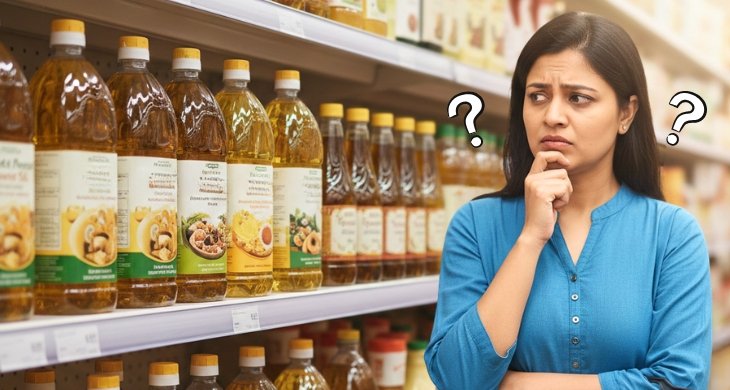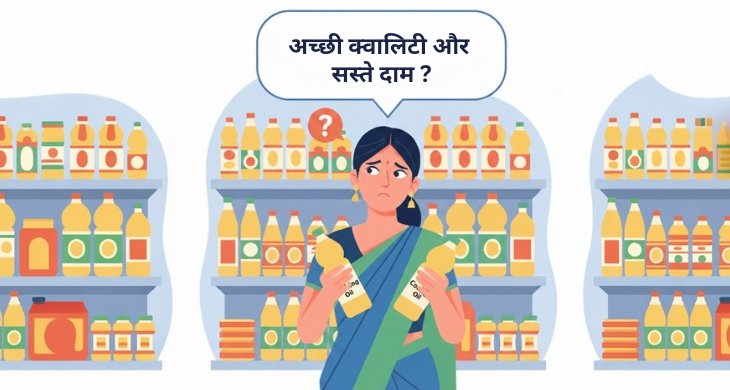

Walk into any grocery store today, and you’ll find dozens of cooking oil brands. Each of them promises premium quality, extra nutrition, and heart health. Many of them also come with a hefty price tag. But the big question is:
Does a higher price mean healthier and better oil?
Or are we just paying more for branding and marketing?
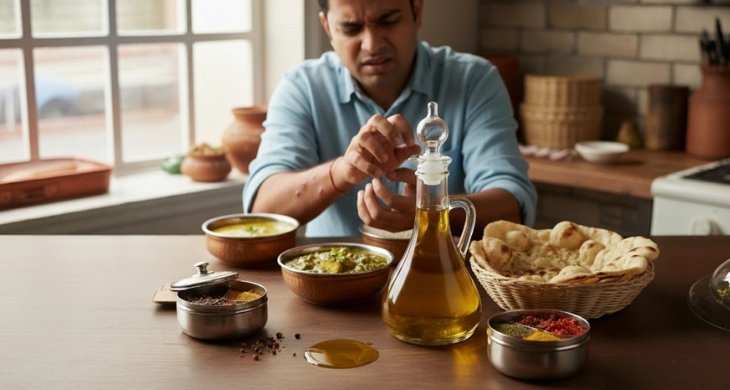
Let’s break down fancy bottles myth.
Why Do Some Oils Cost More?
The price that you pay for your oil depends on various factors:
- Raw material quality: Premium-grade seeds are generally well cleaned and free from pests, which requires high maintenance by the farmers. This maintenance makes raw materials more expensive.
- Branding & Celebrity Marketing: Brands pay a huge amount for TV advertisements and celebrity appearances. For example, Byju’s spent Rs 2000 crore on advertising in 2021 while making just Rs 2800 crore as revenue. This means that for every Rs 100 earned, they spent Rs 88 on marketing. This price is ultimately charged by the consumers. The quality remains the same; it is just the price that increases.
You may be paying extra for the promotion and not the actual product.
- Packaging: Premium packaging makes the product more expensive. For example, glass bottles are more fragile and heavier, which adds to more handling costs than a plastic bottle.
What Really Makes an Oil Better?
Do not get fooled by the aesthetics of fancy bottles. You should instead look for nutrition. According to the American Heart Association, cooking oil should have:
- Healthy fats: Oil should have healthy fats such as MUFA (monounsaturated fatty acids) and PUFA (polyunsaturated fatty acids), because they reduce bad cholesterol and improve heart health.
- Low trans fat: Trans fats increase the risk of heart disease by clogging the arteries.
- Natural antioxidants: Oils rich in vitamin E protect from damaging cells and boost immunity.
Branding Creates Perception, Not Nutrition
Words like ‘premium,’ ‘organic,’ or ‘immunity booster’ influence buyers to pay extra money even if the difference is very small or purely marketing. Branding does not guarantee nutrition. In short, a premium is not healthy.
So yeah, save yourself from being fooled.
What Should You Do Instead?
Experts from the IJEM (Indian Journal of Endocrinology and Metabolism) suggest oil rotation as a good practice. Using only one oil does not provide the full nutrition that your body requires.
- Mustard Oil: rich in Omega-3, Omega-6, and vitamin E, which supports hair and skin health.
- Groundnut oil: rich in MUFA and PUFA, which increases heart health.
- Sesame oil: rich in omega-3, omega-6, and vitamin E, which regulates blood pressure.
So, balance your nutrients with different oils at regular intervals.
Your Next Step
Expensive oil is not always healthy. One should look for what is inside the bottle and not how it looks. Your health is more than just a fancy bottle.
So the next time you shop for cooking oil, do not fall for a celebrity face or fancy package.
- Share this with someone who pays more than they should for their groceries.