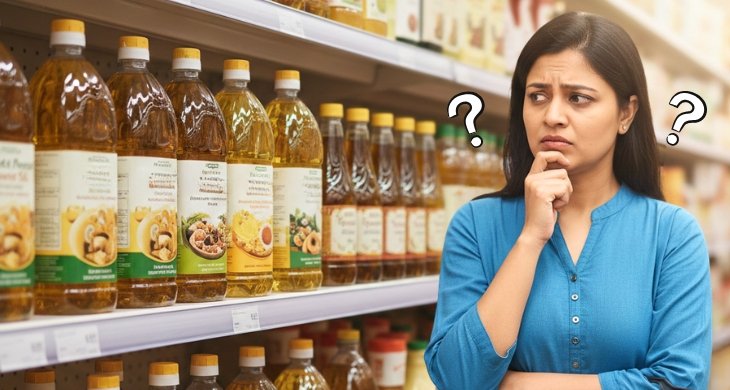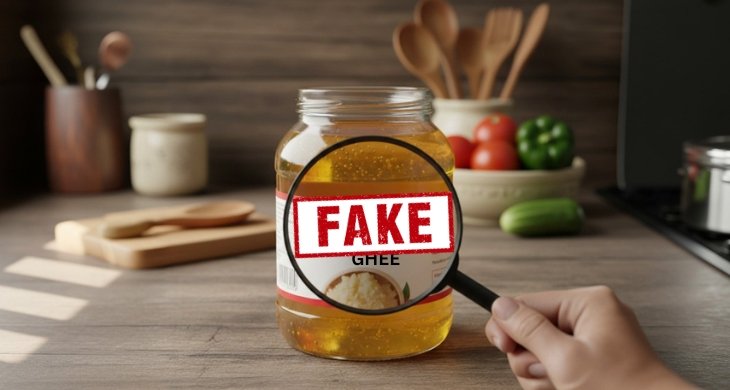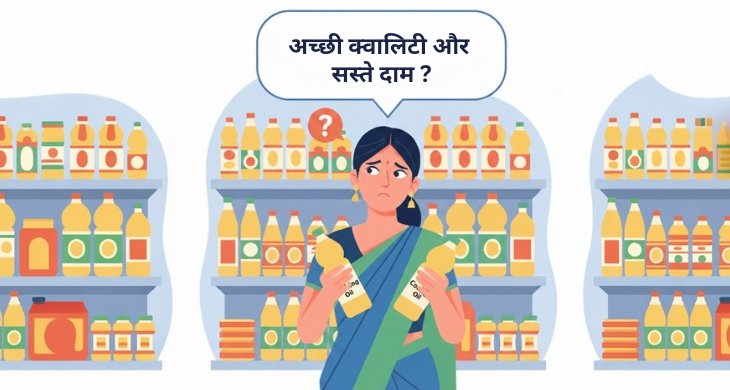
When you pick up a bottle of cooking oil, what’s the first thing you notice?
Is it the price or the brand? Perhaps you are attracted by both. But one thing that you should ask. Is fancy packaging equivalent to a safe product?
The answer is a clear no. In fact, you should focus on labels and food-grade certifications. But what do they really mean? And why you should be more careful than you think.
Let’s break it down in a simple and practical way:
What Does “Food Grade” Actually Mean?
Food grade isn’t just a marketing buzzword, but shows the promise that brands make to their customers.
Food-grade certifications ensure that an edible product like cooking oil is safe, hygienic, and suitable for human consumption. These certifications are issued by the FSSAI (Food Safety and Standards Authority of India) in our country. These grades check:
- Manufacturing processes
- Hygiene and sanitation
- Storage and packaging standards
In short, food-grade means the oil on your plate has passed multiple quality and safety checkpoints before reaching your kitchen.
Why Food Grade Certification Matters
Food-grade certifications are important for several reasons:
1. Safety You Can Trust – Certified food-grade oils indicate that they have met strict production standards. A certified oil product is a testimony that it is safe for public use and does not affect health.
2. Consistent Quality- FSSAI checks consistency through scientific standards to ensure that every batch meets the same quality standards in terms of taste, aroma, and performance.
3. Better Health Outcomes- Food-grade certification ensures that the product complies with hygiene and safety standards, which helps in achieving better health outcomes.
4. Transparency & Accountability- Certified manufacturers are accountable to regulatory authorities. This means that there is no shortcut to making products. In simple terms, manufacturers are subjected to regular audits, inspections, and compliance.
Common Food Grade Certifications You’ll See on Edible Oils
While certifications may vary by region, here are some commonly recognised ones:
- FSSAI (Food Safety and Standards Authority of India)
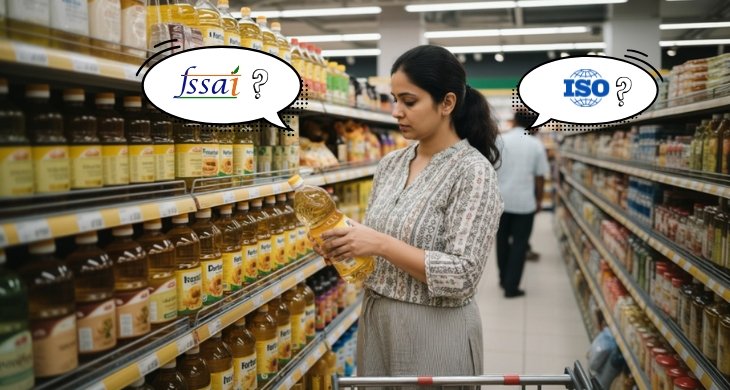
If you are confused about whether the oil is safe or not. Simply check the FSSAI mark, which ensures food safety, hygiene, and quality compliance.
Note that FSSAI consists of 14 digits. Any brand having fewer digits is a scam. - ISO Certifications
ISO certificates give credibility and assurance to the food products. For example, a food package having ISO 200XXX means that the product complies with the quality and safety standards. - AGMARK
AGMARK covers a wide range of food products such as grains, pulses, edible oil, honey, etc. AGMARK is issued by the Ministry of Agriculture, which is given to all agricultural products. The logo assures that the food is of high quality.
Each of these certifications adds another layer of assurance that the oil you’re consuming meets strict safety norms.
What It Means When an Oil Manufacturer Is Certified
For an oil manufacturing company, food-grade certifications aren’t just stamps on a label; they reflect a commitment to quality
If an edible oil has these certifications, it indicates that:
- Raw seeds and ingredients are carefully selected
- Oil goes through advanced refining and filtration processes
- Strict hygiene controls at every production stage
- Safe, food-grade packaging materials
- Regular quality testing and audits
In other words, certified manufacturers give priority to your health.
How Consumers Can Make Smarter Choices
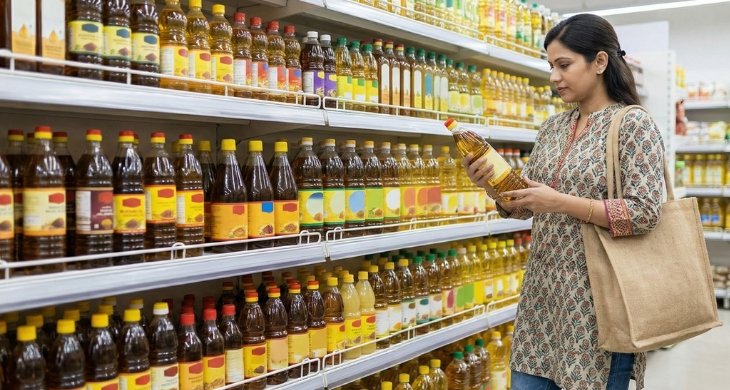
Next time, if you buy edible oil or any other food product, make sure to read the labels carefully. Check what ingredients are listed and what they mean. The simplest way to assure yourself of the food quality is to look for the food grade certifications.
Because when it comes to food, especially something you use every day, quality isn’t optional- it’s essential.
In Every Drop, Quality Matters
At the end of the day, food-grade certifications are about trust. Trust that what you’re feeding your family is safe, pure, and responsibly made. Because good health always begins with good food.
- Share this with everyone and tell them to make food-grade certification their new shopping standard