Walk into any store or scroll online, and you’ll see dozens of mustard oil bottles.
All of them say “pure.” A few of them actually are.
Here’s how to choose the right one for your home, without overthinking it.
1. Start With the Process, Not the Price
Cold-pressed (or kachi ghani) mustard oil is extracted at low temperatures, typically below 45°C. This avoids chemical refining and preserves the oil’s natural properties, including its nutrients, flavor, and therapeutic compounds.
What this means for you:
- The oil retains monounsaturated fatty acids (MUFA), omega-3, and vitamin E
- No hexane or chemical solvents are used in the extraction
- The natural pungency and aroma remain intact
If the label doesn’t clearly mention “cold-pressed” or “kachi ghani,” it’s likely refined or blended with cheaper oils.
2. Trust Your Nose and Eyes
Real mustard oil has distinct characteristics that are hard to fake:
Visual cues:
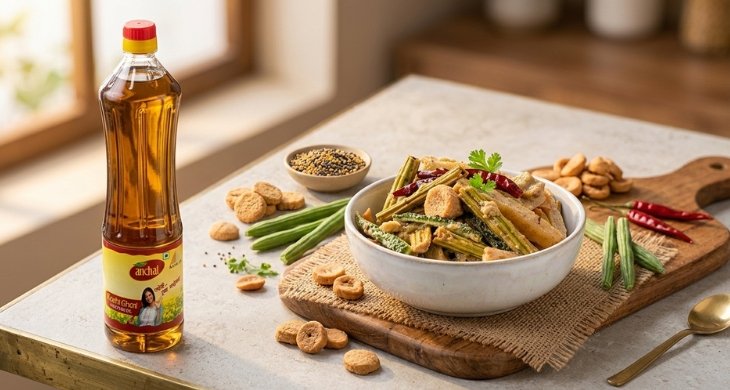
- Deep golden-yellow color with a slight amber or reddish tint
- Clear and transparent (not cloudy, unless freshly pressed)
- Consistent color throughout the bottle
Aroma test:
- Strong, sharp, and pungent smell that’s immediately recognizable
- Natural mustard seed aroma, not neutral or artificially scented
If the oil smells neutral, has a pale yellow color, or looks watery, it may have been heavily processed or diluted.
3. Read the Label Carefully
A good cold-pressed mustard oil should clearly mention:
- “Cold-Pressed” or “Kachi Ghani” – This confirms traditional extraction
- Single-seed source – “100% Mustard Seeds” with no other oils listed
- No additives – Zero preservatives, chemicals, artificial colors, or flavors
- Manufacturing details – Clear date of manufacture, batch number, and expiry
- FSSAI certification – Ensures food safety compliance
- Source of seeds – Some brands mention the region or farm origin
✗ Red Flags to Avoid:
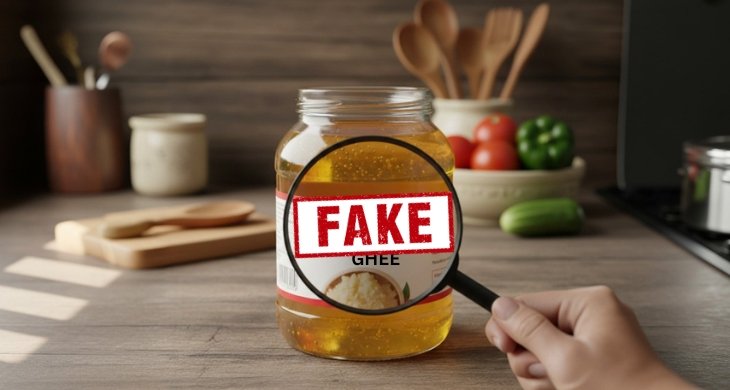
- “Blended oil” – Often mixed with cheaper refined oils like soybean or palm oil
- “Light” or “Refined” – These have been chemically processed and stripped of nutrients
- Vague claims – Terms like “pure” or “natural” without specific extraction details
- No ingredient list – If ingredients aren’t clearly stated, walk away
- Suspiciously low price – Quality cold-pressed mustard oil costs more due to the process and seed quality
- Generic or missing brand information – No way to trace the manufacturer
4. Choose Brands That Control the Process
Brands that manage pressing and packaging tend to deliver more consistent quality. Small-batch or legacy manufacturers often focus more on purity than shortcuts.
For 33 years, our brand has been trusted in the market for delivering authentic cold-pressed mustard oil. We control every step from extraction and careful packaging to ensure you get nothing but purity in every bottle.
Tips for Using Mustard Oil Effectively
Getting the right oil is only half the battle. Here’s how to use it properly:
For Cooking:
- Tempering (Tadka): Heat the oil until it reaches its smoking point, then let it cool slightly before adding spices. This reduces the pungency while retaining flavor.
- High-heat cooking: Mustard oil has a high smoke point (around 250°C), making it ideal for deep frying, sautéing, and stir-frying.
- Pickling: The antimicrobial properties make it perfect for preserving pickles (achaar) for months.
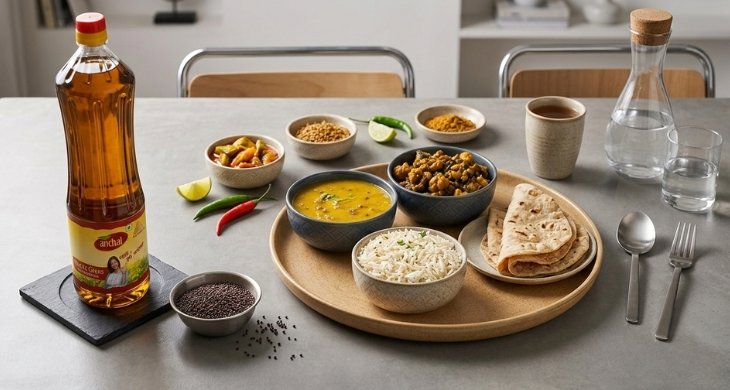
- Daily cooking: Use it in curries, dal, vegetables, and rice preparations for an authentic regional taste.
- Start small: If you’re new to mustard oil, start with smaller quantities and gradually increase as your palate adjusts.
For Massage and Skin Care:
- Warm the oil slightly before massaging it onto joints, scalp, or skin
- Use it as a hair mask 30 minutes before washing for stronger, shinier hair
- Mix with turmeric for a natural skin brightening treatment
Storage Tips:
- Store in a cool, dark place away from direct sunlight
- Always close the cap tightly after use to prevent oxidation
- Use within 6-12 months of opening for best quality
- Never store near the stove or in warm areas
Smell Test Before Use:
Before cooking, take a quick sniff. Fresh cold-pressed mustard oil should have a strong, characteristic aroma. If it smells off, rancid, or musty, it may have spoiled.
Common Mistakes to Avoid
❌ Buying based on price alone: Cheaper oils are often refined or blended. Invest in quality for your health.
❌ Ignoring the expiry date: Even cold-pressed oils have a shelf life. Always check before buying.
❌ Storing in light: Light exposure degrades the oil’s nutrients over time. Store in a cool, dark cabinet
❌ Not heating properly: Some people avoid heating mustard oil, but heating it once before use can reduce excessive pungency.
❌ Using rancid oil: If the oil smells foul or has changed color significantly, discard it.
Choosing the right cold-pressed mustard oil doesn’t have to be complicated. Focus on transparency, trust your senses, read the label carefully, and choose brands with proven track records.
Your health and your food deserve nothing less than pure, authentic mustard oil.
Ready to make the switch? Explore our cold-pressed mustard oil on the Shop page and make a choice rooted in clarity, not confusion.