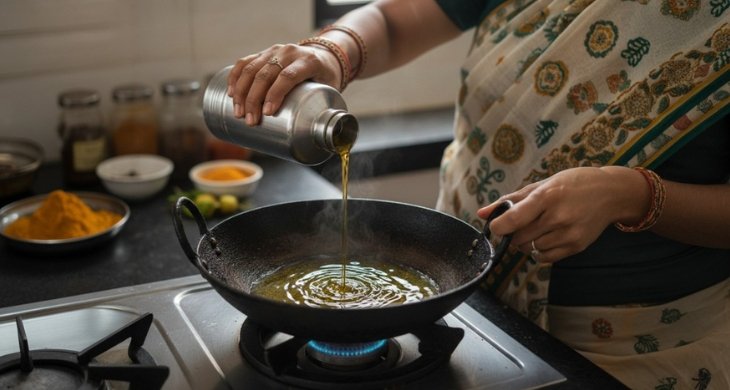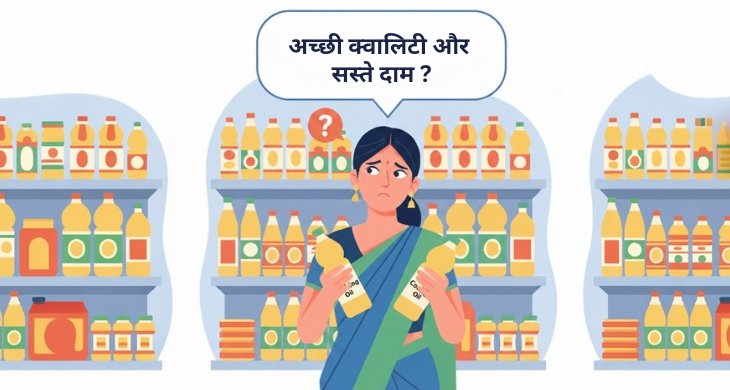
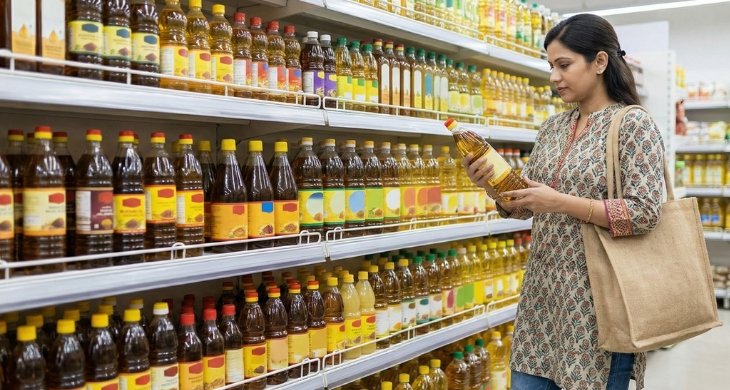
Walk down the cooking oil aisle in any store, and you’ll see dozens of bottles. All of them claim to be pure. Most look identical. But the labels tell very different stories.
Here’s how to read edible oil labels properly without getting overwhelmed.
Why Oil Labels Are Confusing (And Often Misleading)
Food companies spend millions on packaging psychology. The front label screams “natural” or “healthy,” while the real information hides on the back in small print. Understanding what these terms actually mean and what to look for on the label can transform your cooking and health.
Start With the Extraction Method
The single most important thing on any oil label is how the oil was extracted. Everything else flows from this.
Cold-Pressed (Kachi Ghani / Wood-Pressed)
- What it means: Oil extracted at temperatures below 45°C using traditional mechanical pressing
- No chemical solvents: Pure mechanical extraction only
- What you get: Natural nutrients, flavor, aroma, and color intact
- Characteristics: Darker color, stronger smell, richer taste
- Health benefits: Higher in antioxidants, vitamin E, and natural compounds
- Best for: Daily cooking, traditional recipes, pickles, tadkas
Refined Oil
- What it means: Oil extracted using hexane (a chemical solvent), then processed to remove color, smell, and taste
- Processing steps: Deacidification, bleaching, deodorization
- What you get: Neutral smell, light color, longer shelf life
- Characteristics: Clear appearance, no smell, very mild taste
- Trade-offs: Many natural nutrients are removed during processing
- Best for: High-heat deep frying (above 220°C), bulk storage, neutral-flavored cooking
The key point: Neither is inherently “bad.” Cold-pressed oils offer more nutrition; refined oils offer convenience and high smoke points. What matters is knowing which one you’re buying and ensuring refined oils meet safety standards.
Understanding FSSAI Standards for Edible Oils
The Food Safety and Standards Authority of India (FSSAI) sets specific quality parameters for all edible oils sold in India. Here are the key ones you should know:
1. Hexane Residue (For Refined Oils)
- What it is: Hexane is the chemical solvent used to extract refined oils
- FSSAI limit: Must not exceed 5.0 ppm (parts per million)
- Why it matters: High hexane levels indicate poor refinement and potential health risks
- For cold-pressed oils: Should be zero since no solvents are used
- What to check: Better brands mention “hexane residue within FSSAI limits” or provide lab reports
2. Free Fatty Acids (FFA)
- What it measures: How much the oil has broken down or degraded
- What it tells you: Freshness and storage quality
- Acceptable range:
- Cold-pressed oils: Under 1%
- Refined oils: 0.05-0.1% (should be very low)
- Why it matters: High FFA means the oil is rancid or has been improperly stored
- Warning sign: If oil smells or tastes off, FFA is likely too high
3. Peroxide Value (PV)
- What it measures: Oxidation level (how much the oil has reacted with oxygen)
- Units: Expressed as milliequivalents of active oxygen per kilogram (meg O₂/kg)
- Acceptable limit:
- Fresh oils: Under 10 meq O₂/kg
- General standard: Under 20 meq O₂/kg
- Why it matters: A high peroxide value means the oil is becoming rancid and may develop off-flavors
- What causes it: Exposure to light, air, and heat
- Storage tip: Always store oils in dark, cool places with tight caps
4. Acid Value
- What it measures: Total acidity in the oil
- Why it matters: Indicates oil quality and proper storage conditions
- Simple rule: Lower is better high acid value suggests degradation
5. Iodine Value
- What it measures: Degree of unsaturation (number of double bonds in fatty acids)
- Why it matters: Each oil type has a characteristic range; helps detect adulteration or blending
- Example: Mustard oil has a higher iodine value than groundnut oil
The key point: You don’t need to memorize these numbers, but knowing they exist helps you spot transparent brands. Good brands either mention these parameters on the label or provide lab reports on their website.
What to Look For on Edible Oil Labels
When you pick up a bottle of cooking oil, here’s your quick checklist:
✓ Must-Have Information
- Extraction Method
- Should clearly say “Cold-Pressed,” “Kachi Ghani,” “Wood-Pressed,” or “Refined”
- If it doesn’t mention the method → Assume it’s refined
- Single Seed Source
- “100% Mustard Oil” or “100% Groundnut Oil”
- Not “Blended Oil” or “Mixed Vegetable Oil”
- Batch Number & Manufacturing Date
- Fresh oil matters – oils degrade over time
- Check the manufacturing date, not just the expiry date
- FSSAI License Number
- Example: “FSSAI Lic. No. 10012021000123”
- Ensures the product meets regulatory standards
- Mandatory for all food products in India
- Best Before Date
- Oils have a shelf life of 12-18 months, typically
- Cold-pressed oils may have shorter shelf life (6-12 months)
✓ Bonus Points (Shows Transparency)
- Source of seeds: Region or farm mentioned
- Test reports: FFA, PV, or chemical limits mentioned (to know more about permitted limits by the government, check this blog)
- No additives statement: “No preservatives or chemicals added”
- Fatty acid composition: Breakdown of MUFA, PUFA, and saturated fats
- Certification marks: Organic, non-GMO, glyphosate-free
- Packaging details: Why they chose dark glass or opaque containers
✗ Red Flags to Avoid
- “Blended Oil”
- Often, a mix of premium oil with cheaper refined oils
- Example: “Mustard oil blended with soybean oil”
- Unless percentages are clearly mentioned, avoid
- No Extraction Method Mentioned
- If the label doesn’t say cold-pressed or refined → It’s refined
- Lack of transparency is a red flag
- No Manufacturing or Expiry Date
- Impossible to judge freshness
- Indicates poor quality control
- Suspiciously Low Price
- Quality seeds and traditional extraction cost more
- Rock-bottom prices suggest adulteration, blending, or low-grade seeds
- Compare prices across 2-3 reputable brands to gauge the market rate
- Missing FSSAI License
- All edible oils must have FSSAI approval
- No license = not legally compliant