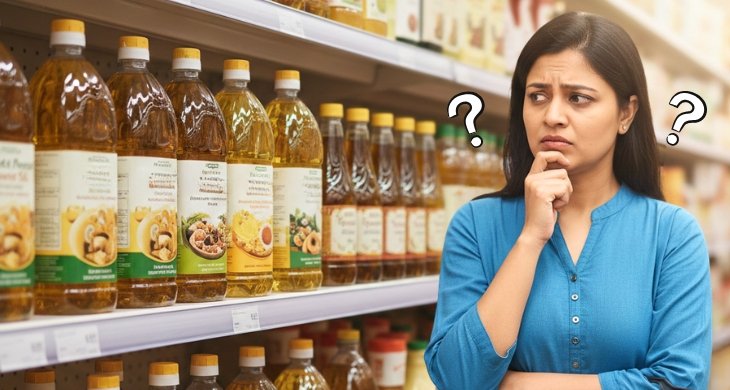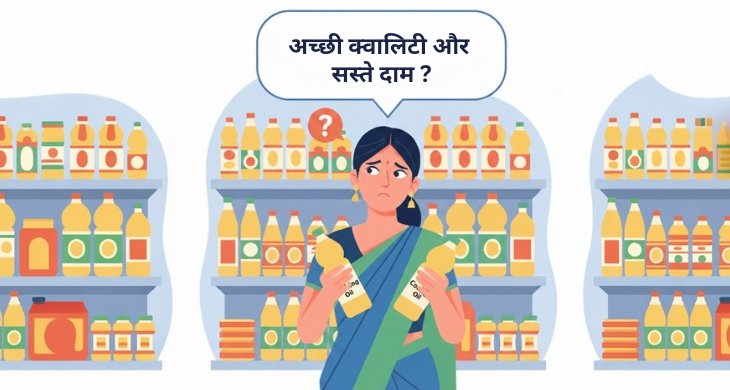
People see expiry dates on labels. They also trust the brand name.
But one thing they forget to ask. Is the oil really pure or adulterated?
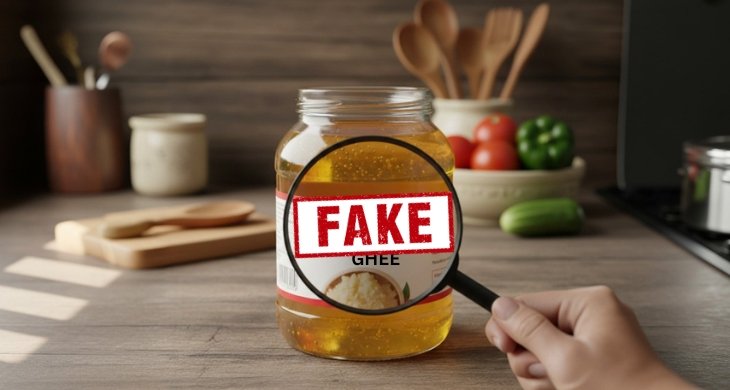
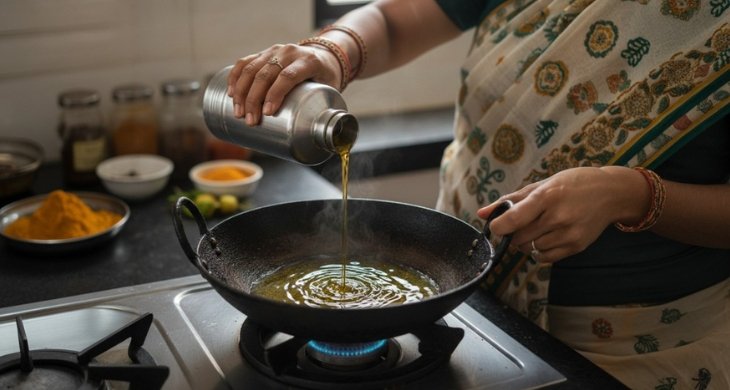
One thing that everyone uses is cooking oil. And what if I told you that it is also the most adulterated essential we are consuming? FSSAI reveals that around 30.7% of edible oil being sold is adulterated. It may shock you, but that is the harsh truth.
Let’s uncover how to spot pure cooking oil and fake oil.
What Is Adulterated Cooking Oil?
The National Library of Medicine defines adulterated cooking oil as:
- Mixing pure oil, such as mustard or olive oil, with cheaper oil or harmful chemicals to increase profit margin and quantity of products.
These practices reduce nutritional quality and may introduce harmful compounds.
Why Oil Adulteration Is a Serious Concern
Regular consumption of adulterated oils poses a serious concern because it can:
- Reduce the intake of essential fatty acids such as MUFA and PUFA
- Increase the intake of saturated fatty acids
- May disrupt digestion and cause inflammation.
- Raise long-term risks related to heart health
Because oil is consumed daily, even small levels of adulteration can add up over time.
Common Types of Cooking Oil Adulteration
Some commonly reported forms include:
- Mustard oil mixed with cheaper vegetable oils
- Olive oil blended with refined seed oils
- Coconut oil diluted with palm oil
- Groundnut oil mixed with cottonseed or soybean oil
These adulterations are often difficult to detect without careful checking.
How to Check Oil Quality Before Buying
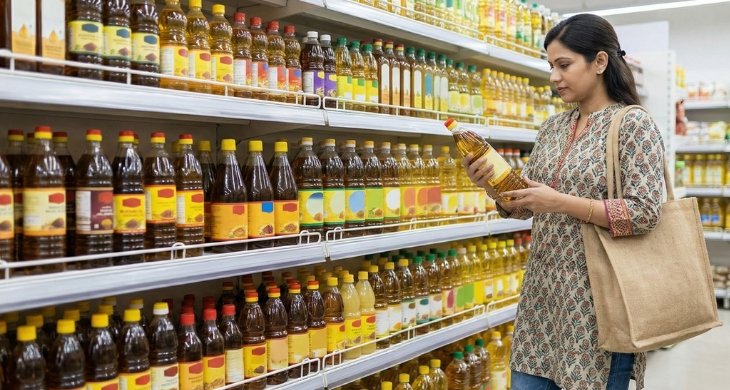
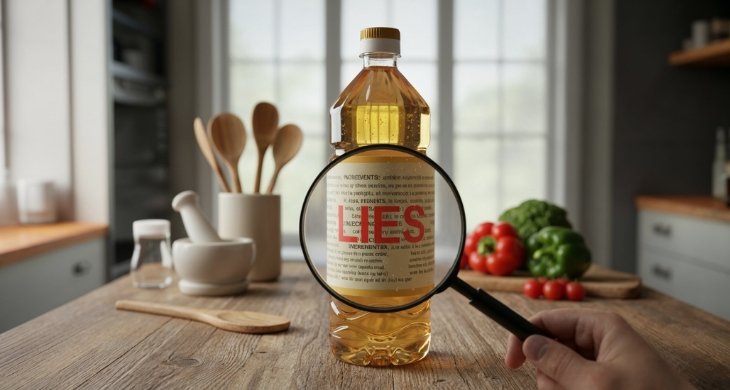
Before purchasing cooking oil, always examine the label carefully:
- Look for a valid FSSAI license number
- Check the ingredient list carefully. Look for fatty acid composition.
- Verify the batch number, manufacturing date, and expiry date
- Avoid vague claims on oil labels, such as edible oil or blended vegetable oil. At times, blended oil does not show the exact ratio.
- Ensure the packaging is sealed and unopened.
Simple At-Home Tests: Detecting Fake Cooking Oil
While lab testing is the most accurate, some simple home tests may help:
- Smell test: Pure oils usually have a mild or characteristic aroma; sharp or chemical smells can indicate adulteration.
- Freezing test: The Freezing test is one of the simplest ways to check the purity of your oil. Pour oil into a bowl and store it in the refrigerator. Mixed or adulterated oil reveals white patches upon freezing. Whereas, if the oil is pure, it solidifies evenly.
- Nitric Acid test (Colour test): The food safety authority prescribes mixing a small amount of mustard oil with concentrated nitric acid in a test tube. Shake carefully and observe the colour. If the oil changes its colour to brown or red, it means that the oil is adulterated.
- Smoke test: If cooking oil releases excessive smoke than usual upon heating, it means that the oil is spoiled.
- Taste Test: Take one teaspoon of oil to taste. Spoiled or degraded oil gives a bitter and unusual taste.
- Texture test: Unusual stickiness or excessive foam is a sign of oil being spoiled.
- Foam Test: If cooking oil develops foam or excessive bubbles while heating, this means that your cooking oil is either spoiled or degraded.
These tests are not a replacement for scientific lab tests, but can be used to assess the quality of cooking oil at an individual level.
Signs of Adulterated Oil During Cooking
Pay attention while cooking:
- If oil smokes excessively at normal temperatures, it may contain toxic compounds.
- If oil develops excessive foams or changes its colour quickly.
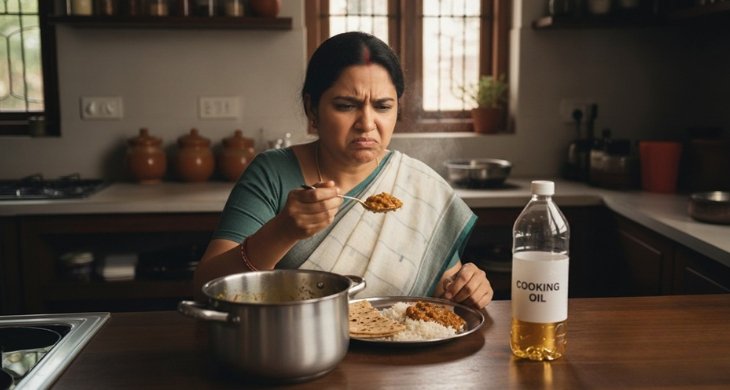
- If cooking oil gives an unpleasant smell or bitter taste in food, the oil might have been adulterated.
- Cooking oil leaving a greasy stain on vessels indicates that it may have been mixed with chemicals.
All these signs may indicate poor quality or adulteration. So beware when you notice this.
How to Choose Pure and Safe Cooking Oils
To reduce the risk of adulteration:
- Buy oils from reputable brands and stores
- Choose oils with transparent labelling containing the necessary information related to ingredients and fat composition.
- Store oils properly. Keep oil containers away from direct heat or sunlight.
Avoid reusing cooking oil, as it can lead to the formation of toxic materials.
Conclusion
Identifying pure versus adulterated cooking oil doesn’t require expert knowledge. Having awareness and paying attention to detail is the key to saving oneself from fake oils. Since cooking oil is a daily dietary staple, choosing pure, well-labelled, and trusted oils can protect your health in the long run.
- Share this with everyone because they need awareness, too.