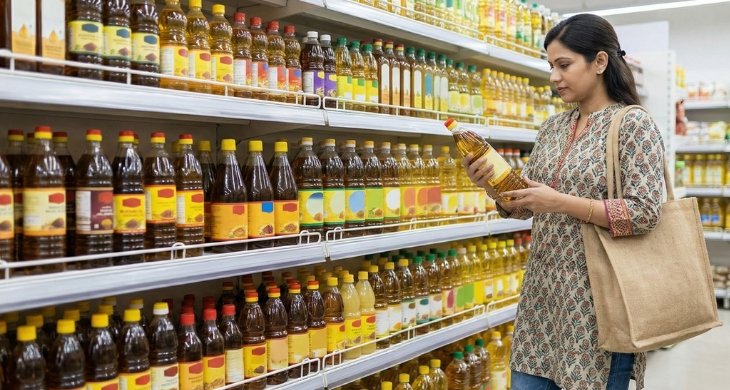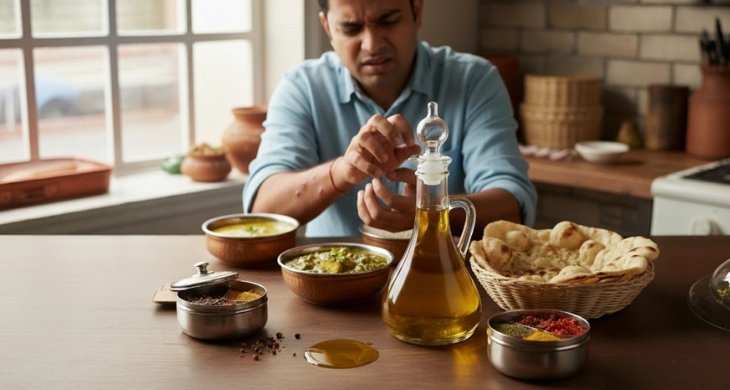
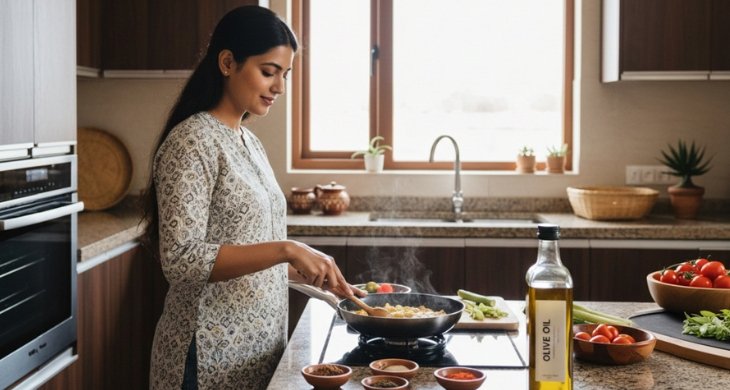
There was a time when olive oil was only seen in Mediterranean regions, but not anymore. Because it has entered several Indian kitchens. The Indian olive oil market size reached USD 577.8 million in 2025. The market is expected to reach USD 1,580.4 Million by 2034, exhibiting a growth rate (CAGR) of 11.83% during 2026-2034.
These numbers are enough to show olive oil’s popularity for cooking. But why is it gaining popularity among Indians? Let’s explore the reasons.
Why Everyone’s Switching to Olive Oil
- Health Consciousness on the Rise- As more Indians prioritise their health, olive oil’s heart-healthy fats and antioxidants are making it an attractive alternative to traditional oils like mustard and ghee. It’s seen as a lighter, healthier option for cooking.
- Celebrity influence- Celebrity chefs and actors have promoted olive oil as a part of their lifestyle. Chef Sanjeev Kapoor partnered with Leonardo Olive Oil to promote it for Indian cooking. Actors like Karishma Kapoor and Lara Dutta have also promoted the same.
- Local Production & Sustainability- Indian states of Rajasthan and Tamil Nadu are planting over 1,44,000 trees for olive oil cultivation, making it more sustainable and affordable. This trend is helping India move towards self-sufficiency in olive oil production.
Health Benefits of Olive Oil For Cooking
Olive oil is becoming popular for its health benefits. The North American Olive Oil Association suggests some health benefits related to the oil:
- Antioxidant Property: Olive oil is rich in Vitamins E and K, along with healthy fatty acids. It also contains a lot of potent antioxidants, which may lower your chance of developing chronic diseases.
- Cholesterol control: Olive oil consumption is linked to reducing bad cholesterol levels. Polyphenols are abundant in olive oil, which lowers blood pressure. As a result, people with hypertension can benefit from olive oil.
- Boosts digestion: Olive oil maintains the health of our digestive tract. Constipation is avoided by maintaining regular bowel movements.
- Manage weight: Olive oil has oleic acid, a monounsaturated fatty acid, which supports healthy blood sugar levels. It also induces fullness, which causes us to consume fewer calories by eating less overall.
Olive Oil: Not so Ideal for Every Cooking
Olive Oil has undoubtedly several benefits, but it can not be used for every cooking type due to various reasons:
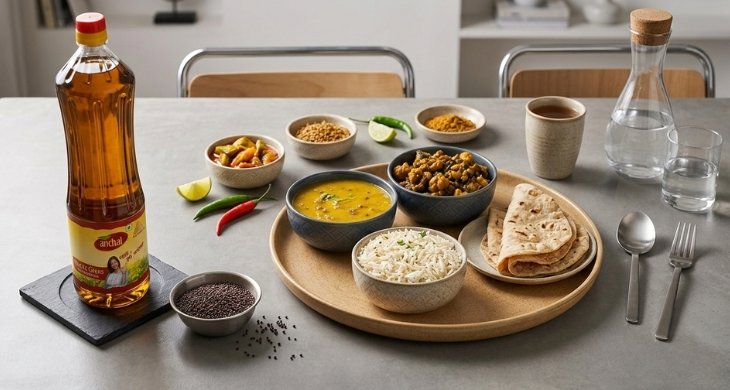
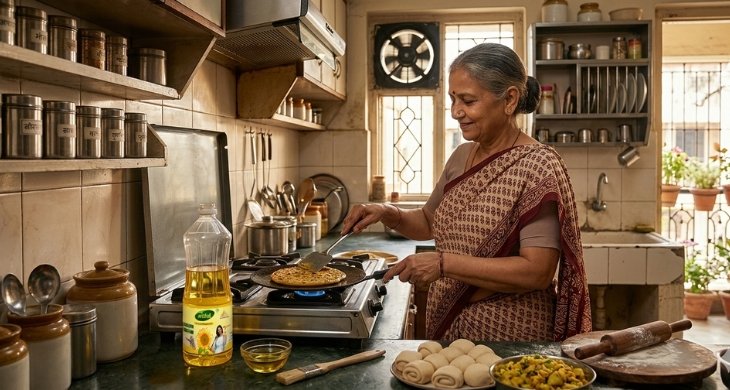
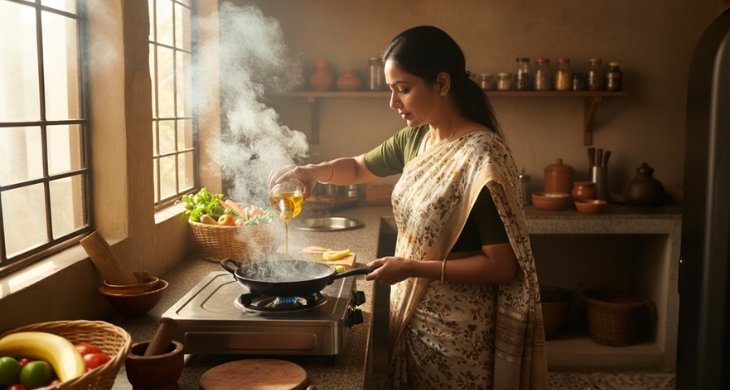
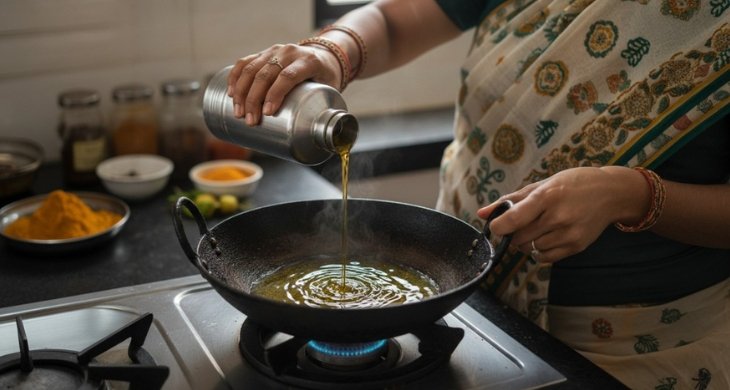
- Low Smoke Point: Olive oil has a low smoke point, which is not suitable for deep frying and tadka. You can not make things like samosa, puri or pakoras.
- No nutrients at High Heat: Olive oil has antioxidants and polyphenols. However, heating it at high temperatures can degrade these nutrients, which reduces its health benefits. Traditional Indian oils like mustard or sunflower oil are better suited for high-heat cooking while retaining flavour and nutritional value.
Best Uses for Olive Oil
Olive oil best shines when it comes to:
- Salads & dressings: Olive oil adds flavour and nutrients without heat.
- Low-heat sautéing: Better for light cooking with moderate temperatures.
- Dips & finishing oil: Ideal for drizzling over cooked dishes for aroma and taste.
Conclusion
The rise of olive oil in Indian kitchens reflects a growing shift towards healthier, more balanced cooking. As people become more health-conscious and exposed to global food trends, olive oil is quickly becoming an essential part of the Indian culinary landscape.
- Share this with someone who has used olive oil for cooking. Let them share their experience.