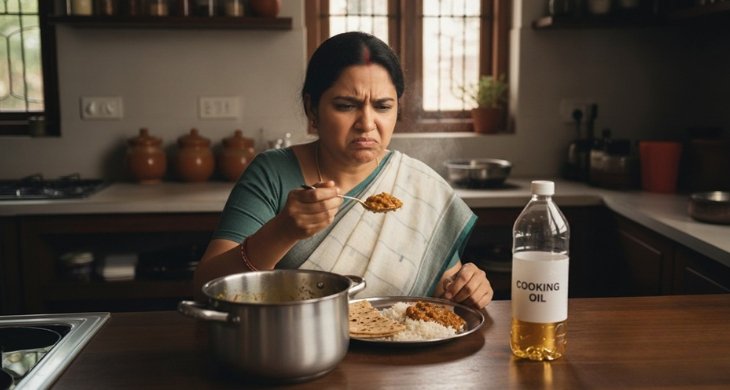
Indians hate wasting anything—clothes, food, and especially cooking oil. But did you know that reusing oil to save a few rupees could silently push you toward cancer and heart disease?
The truth is shocking.
You’ve seen reused oil in kitchens, street stalls, and restaurants.
But is it safe?
Absolutely NOT.
If you are reusing the oil in your kitchen, we completely understand it; however, it is not worth the risk associated with it. As per the International Agency for Research on Cancer, 11.7% of the population in the study experienced ovarian cancer due to consuming trans fat available in reused oil.
What Really Happens When You Reuse Oil?
When oil is heated again and again, it forms Total Polar Compounds (TPC)—toxic molecules created when oil breaks down under high heat.
These compounds lead to:
- Harmful compounds such as trans fats, which increase the health risk.
- Repeated heating breaks down the nutrients (healthy fatty acids and vitamins), so reused oil has no nutritional benefit.
- Food gets contaminated due to leftovers in the oil when reheated.
Health Risks of Reused Cooking Oil
- High Cholesterol Level: When oil is repeatedly reheated, its natural structure changes, and it starts forming trans fats. It reduces good cholesterol levels in our body.
- Cancer: Repeatedly heated cooking oils (RCO) can generate a variety of compounds, including polycyclic aromatic hydrocarbons (PAH), some of which have been reported as carcinogenic. It can cause cancer, including lung, colorectal, breast, and prostate cancers.
- Poor Digestion: If reheated oil is consumed regularly, then it may cause discomfort to the stomach, leading to bloating and acidity.
- Heart Disease: Professor of Cardiology Sundeep Mishra from AIIMS warns that boiling and reusing refined oils creates trans fats, which can build up in your arteries and increase the risk of heart attacks.
Want to Save Money? Here’s How to Reuse Oil More Safely
(Still not recommended—but if you MUST reuse it, do it wisely.)
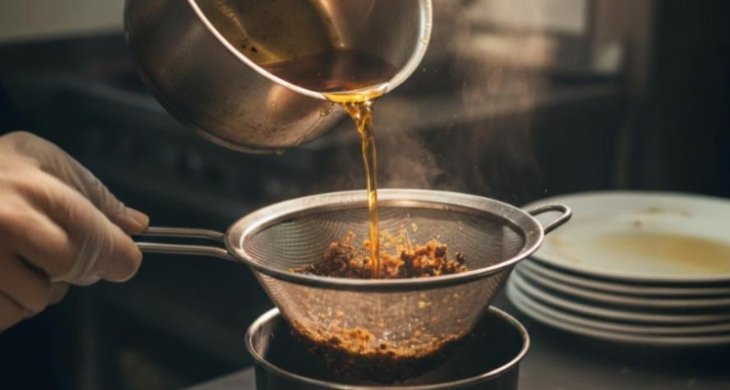
- After cooking, strain the oil to remove any food particles.
- Use clean, dry, and airtight jars to store the used oil. Avoid using plastic containers, as chemicals can leach into the oil.
- Avoid mixing old and fresh cooking oil. The chances of the harmful compounds’ formation increase when mixed.
- Strictly avoid oils used for meat or fish. The oil used for such food should be discarded after one use because it spoils faster.
- Remember: Olive oil should NOT be reused for frying
How Many Times Is It Safe to Reuse Oil?
Although it is not recommended to reuse oil, if you want to reuse it, different cooking methods should be considered.
For example, oil should be used only 1 or 2 times for deep frying. For shallow frying, it can be used 2-3 times. Please keep in mind that olive oil is not suitable for reuse during frying because it has a low smoke point and breaks down quickly.
Signs that oil is no longer safe to reuse
- If the oil looks much darker than its original color, it has likely broken down and is unsafe.
- When oil develops a strong and unpleasant smell that is sour or acidic, then it is no longer safe to use.
- If oil releases excessive smoke at low or medium flame, then it is more likely to have reached its breaking point.
- Oil that turns thick, gummy, sticky, or jelly-like is a strong sign of oxidation (chemical degradation of oil) and should be discarded.
Eco-Friendly Ways to Dispose of Oil
- Before throwing away your oil, let it cool and solidify. Later, put that into a container to dispose of it with regular household waste. Pouring directly down the drain can clog the pipes.
- Reuse oil for non-cooking household purposes like polishing wooden items or lubricating squeaky hinges.
- Avoid mixing oil with chemicals or water so that it can be properly recycled or processed.
Your Next Step
Reusing cooking oil may save money today, but it may cost you your health tomorrow.
Choose wisely, stay informed, and treat your body with the respect it deserves.
Do YOU reuse your cooking oil?
Share with someone who needs to read this!