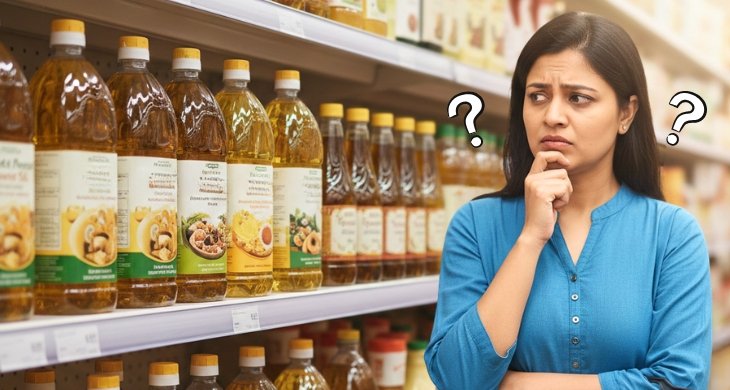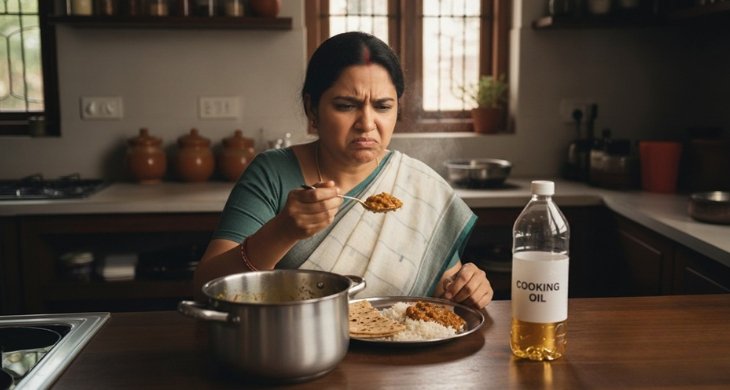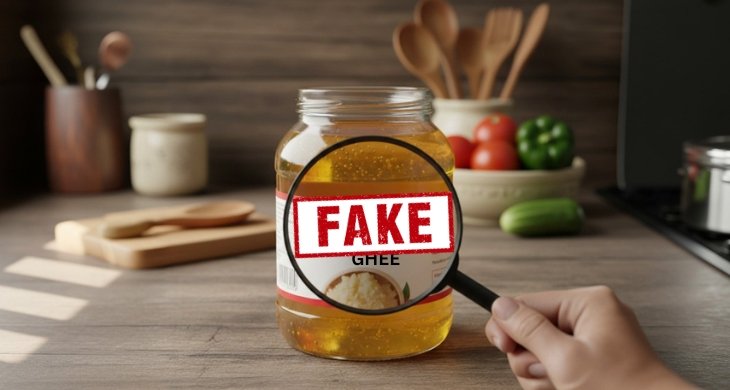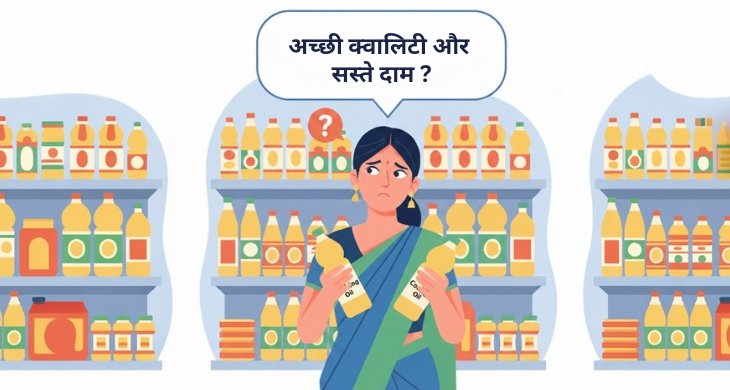
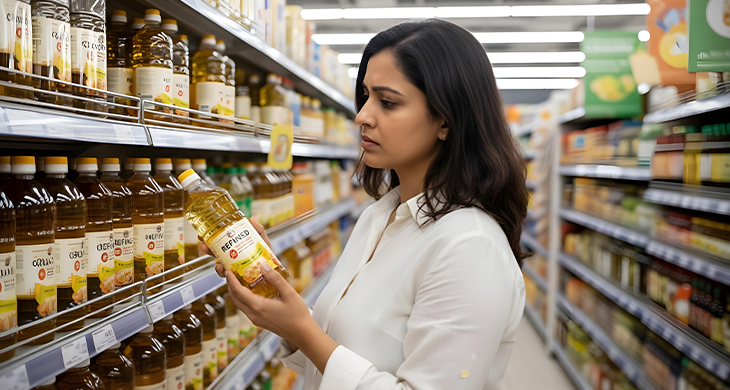
Choosing the right cooking oil for your meals is not rocket science. But many marketing tactics may confuse buyers into falling for the wrong product. At times, what you perceive as healthy cooking oil is not healthy at all.
Worry not! You just need to know what to look for. Let’s decode some of the biggest red flags in cooking oil labels.
# Red Flag 1: Blended Oil Without a Clear Percentage
Many brands write “blended oil” in big letters but hide the actual percentage of each oil. FSSAI suggests blended oils as beneficial because they provide balanced fats.
Red flag: If the label does not clearly mention the exact ratio (e.g., 70% rice bran + 30% sunflower), the brand may be hiding lower-quality oils.
Tip: Read the ratio and percentage of blended edible oils on the label. FSSAI mandates that the font size of the label declaration ‘Blended Edible Vegetable Oil’ should not be less than 5 mm.
# Red Flag 2: “Lite,” “Slim,” and “Heart Healthy” words on front label
These words are used to make people believe that the oil contains less fat. But these are marketing terms and not scientific claims.
Red flag: Labels that say “Lite oil” may simply mean light in colour, and not calories or fat.
Tip: Flip the packet and read the nutritional content, such as the MUFA/PUFA ratio.
# Red Flag 3: No FSSAI license or batch number
Every edible oil must legally display its license number, batch code, and manufacturing date.
Red flag: Missing or unclear regulatory details raise doubt on the oil’s authenticity.
Tip: Check the FSSAI number, expiry date, and batch code before purchasing.
Beware that FSSAI contains a 14-digit number. Brands displaying fewer digits are fake.
# Red Flag 4: Long List of Additives or Antifoaming Agents
High-quality cooking oils should have minimal additives.
Red flag: Multiple names of antioxidants like BHA/BHT, emulsifiers, or antifoams like dimethylpolysiloxane mean that oil oxidises quickly, which requires chemicals to prevent foaming, rancidity or separation.
Tip: FSSAI permits antifoams like dimethylpolysiloxane up to 10 ppm (parts per million) in edible oils, but excessive use implies subpar refining. So next time, if any label contains this long list, just stay cautious.
5. Vague Claims Like ‘Premium’, ‘Natural’, ‘Pure’
These words have no regulatory definitions and can be used to lie.
Red flag: If the label relies more on these terms than on actual oil details, then its authenticity is questionable. By using these terms, brands often try to hide real ingredients.
Tip: Check the FSSAI mark, ingredient list, batch number and expiry date, etc over these vague claims.
Trust the oil’s processing method and not its marketing language.
Your healthiest choice starts with understanding the label. Ignore the marketing tactics, trust the facts. Choose oils that are transparent, safe, and regulated.
- Share this with everyone and save your loved ones from red flags. A little awareness today protects your family’s well-being tomorrow.