
Everyone wants “organic” these days. From fruits and vegetables to cooking oils, the “ORGANIC” label instantly makes us feel healthier.
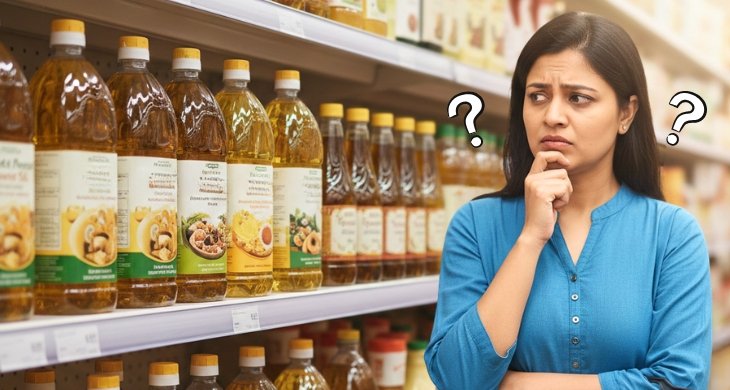
Over the last few years, organic edible oils have taken over shelves and stores. We all look for chemical-free bottles now. But is the shift to organic cooking oils based on real science or just a hype backed by clever marketing? Let’s break it down.
Why Are Organic Oils Becoming So Popular?
Consumers today are more aware of what goes into their meals. Organic oils are seen as a safer choice because they come from crops grown without synthetic fertilisers or pesticides, and many are processed using traditional methods like cold pressing.
Organic oils are also marketed as nutritionally superior, richer in natural antioxidants, and better for overall health.
But are you really getting the benefits?
What Research Really Says
A lot of people are satisfied because they have included organic cooking oil in their meals. It gives more nutrients and less fat. What if I told you that this is not true? Shocking! But this is the reality.
Here is what research says:
- The 2008 Samman study (Macquarie University), a public university in Australia, shows that fat composition does not automatically change with the organic vs conventional oil. So, choosing organic does not guarantee healthy fats.
- Nutritional quality depends on the processing method, storage, and usage of oil rather than just the organic vs. conventional debate.
So your popular belief that organic is always healthier is not exactly true.
Where Things Get Confusing
People often think that organic = healthy. But the story has a lot more to say.
Whether the oil is organic or conventional, heating oil above its smoke point produces oxidised fats, toxins, and inflammatory compounds. So yeah! Even the most organic oils become harmful with high heat.
If not organic oil, then what matters the most?
Instead of chasing the tags, here’s what you should look for:
| What matters | Why it matters |
| MUFA AND PUFA (types of fats) | Promotes heart and brain health |
| Smoke point of oil (heat tolerance) | If oil is heated beyond its smoke point, it releases harmful toxic compounds. |
| Storage | Oils, if stored openly, form harmful products over time. |
| Calorie Intake | Oils are dense in calories, so they can lead to obesity if not consumed in moderation. |
*MUFA is monounsaturated fat, and PUFA is polyunsaturated fat.
No doubt, organic can be a good option, but there is a bigger picture that you should keep in mind.
Stop Using Just One Oil! Experts Say This Works Better
Experts from IJEM (Indian Journal of Endocrinology and Metabolism) suggest oil rotation for various reasons:
- Each cooking oil has a different composition of saturated fats (SFA), monounsaturated fats (MUFA), and polyunsaturated fats (PUFA). And no oil offers the “perfect” ratio of these fats.
- For example, MUFAs (common in olive oil, groundnut oil, and mustard oil) are considered heart-friendly and help in maintaining better cholesterol levels.
- But relying only on MUFA-rich oil might mean you miss out on the nutritional benefits of other fats.
Rotation of oils gives you the right balance of oil fats and other nutritional values, such as omega-3 and omega-6. So make smart choices.
Final Takeaway
Organic edible oils aren’t a miracle health upgrade, but they can be a cleaner, more natural choice when used correctly. Their biggest strengths lie in reduced chemical exposure and better preservation of natural antioxidants. However, the basic nutritional profile remains similar to non-organic oils.
So next time when you buy oil, don’t ask whether the oil is organic. Ask whether it is healthy, minimally processed, correctly used, and suitable for your diet.
Share this with someone who is obsessed with organic oils. They must know that just being organic is not enough.