
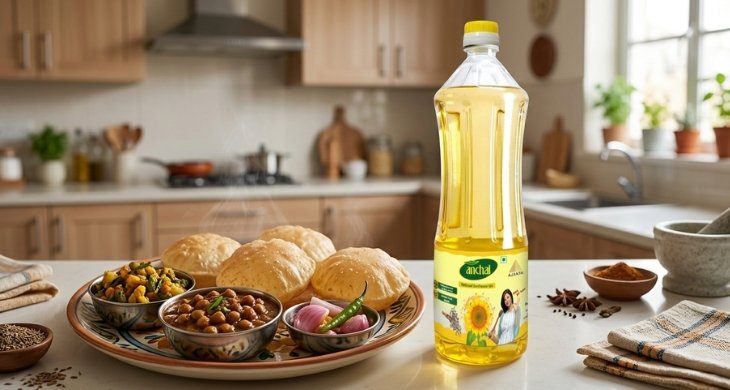
Walk into any grocery store and pick up a bottle of sunflower oil. Somewhere on that label usually in big, confident letters, you will find the word light.
Light oil. Light for the heart. Light on the stomach. Light for the family.
And if you’re a woman managing a household and trying to make healthier choices, that word probably did some work on your buying decision. It was designed to.
What “Light” Actually Means on an Oil Label
When oil companies use the word “light,” they are almost always referring to one of two things:
- Colour. Refined oils go through a process called bleaching, not with chemicals you’d imagine but with natural bleaching clays that remove pigments from the oil, making it paler and more transparent. A lighter-coloured oil looks cleaner on the shelf and in the pan.
- Flavour. Refining also removes much of the natural taste and smell from crude vegetable oil. The result is a neutral, mild oil that doesn’t compete with the flavours of your food. This neutrality is what brands often mean when they say “light.”
What “light” does not mean:
- Fewer calories. Every cooking oil – sunflower, soybean, mustard, olive, coconut contains roughly 120 calories per tablespoon. A “light” sunflower oil has exactly the same calorie content as a regular one.
- Less fat. Oil is 100% fat by definition. “Light” oil is still 100% fat.
- Better for weight loss. No cooking oil is inherently weight-loss friendly in the way the word “light” implies.
So What Is Refined Sunflower Oil Actually Good For?
- A high smoke point. Refined sunflower oil handles heat well. It’s smoke point sits around 225-230°C, making it stable for deep frying, sautéing at high heat and baking. This stability means it doesn’t break down and release harmful compounds as quickly as some lower smoke-point oils when used correctly.
- Neutral flavour. This is genuinely useful, not as a health claim but as a cooking property. When you’re making a cake, a namkeen or a dish where you want the spices and ingredients to be the star, a neutral oil stays out of the way. Cold-pressed mustard oil has a strong personality. Sunflower oil doesn’t and that’s exactly right in certain contexts.
- Vitamin E content. Sunflower oil is a natural source of Vitamin E, a fat-soluble antioxidant that supports skin health and helps protect cells from oxidative damage. This is a real benefit, not a marketing invention. It becomes more relevant for women in their 30s and 40s.
- Light texture in food. Here’s where “light” actually earns its name, not in calories but in how food feels when cooked in sunflower oil versus a heavier oil. Fried foods made in sunflower oil can feel less greasy than those made in groundnut or palm oil because of its composition and how it coats food.
When to Use Sunflower Oil & When Not To
Knowing what sunflower oil is actually good for means using it in the right situations rather than for everything.
Use refined sunflower oil for:
- Deep frying – pakoras, puri, mathri, samosas. Its high smoke point handles this well.
- Baking – cakes, muffins, bread. Its neutral flavour doesn’t interfere with sweet dishes.
- Light sautéing of dishes where you want the vegetables or spices to dominate.
- Any dish where a strong-flavoured oil would feel out of place.
Don’t rely on it for:
- Your daily dal tadka or bhuna masala: this is where cold-pressed mustard oil or soybean oil gives better flavour and a more interesting fat profile.
- Sunflower oil is high in omega-6 but low in omega-3, so making it your only cooking oil is not correct. Make sure you are adding other cooking oil variety.
- Drizzling raw over salads : Its refining means most of the polyphenols and natural compounds are already removed. Cold-pressed oils do a better job here.
The next time you pick up any cooking oil sunflower, soybean, mustard, anything, Look past the front of the bottle. The front is marketing. The back is information.
On the nutrition label, check:
- Calories per serving : all oils will be similar. Don’t be misled by “light.”
- Saturated fat : lower is generally better for heart health.
- MUFA and PUFA content : these are the fats your body uses well.
- Manufacturing date : fresher is always better than a “deal” on old stock.
Ajanta’s refined sunflower oil is available alongside our cold-pressed mustard oil and refined soybean oil – three different oils for three different jobs in your kitchen. Shop at ajantasoya.com/shop