
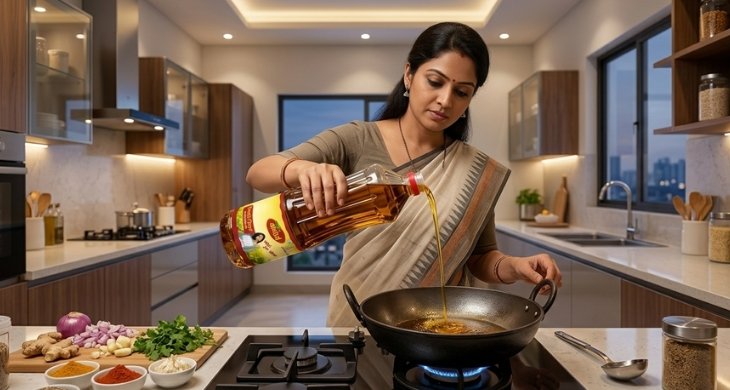
These are 6 small, specific habits, most of which take zero extra time that quietly make the meals you’re already cooking healthier. Not different. Just better.
Habit 1: Smell Your Oil Before You Cook
This takes three seconds and most people have never done it.
Before you tip the bottle over the pan, bring it to your nose. Fresh oil should smell clean either neutral (refined sunflower, soybean) or characteristically sharp (cold-pressed mustard). What it should never smell like is sour, stale or paint-like.
Habit 2: Heat the Pan Before You Add the Oil
Most people add oil to a cold pan and then turn on the flame. Switch this around.
Heat the pan first – 30 to 40 seconds on medium flame – then add the oil. This means the oil reaches cooking temperature faster, you use less of it and your food hits an already-hot surface rather than sitting in slowly warming oil and absorbing it.
Habit 3: Match the Oil to the Job
One oil for everything is convenient. But it’s not always right.
Cold-pressed mustard oil has a strong flavour and a fat profile that makes it genuinely excellent for tadka, dal and bhuna masala. Refined sunflower and soybean oil are neutral and stable better suited for deep frying, baking and dishes where you don’t want the oil to compete with the other flavours.
Habit 4: Stop Reusing Frying Oil More Than Once
This is the most common and most overlooked cooking habit in Indian kitchens.
When oil is heated to frying temperature, it begins to break down. The more times it’s reheated, the more its chemical structure degrades. Reused oil has higher levels of harmful compounds, a lower smoke point than fresh oil and it makes your food taste older and heavier than it should.
A practical tip: Pour the cooled, once-used oil into a separate small container clearly marked “use next, tadka only.”
Habit 5: Measure Your Oil Once a Week
You don’t have to measure every time. But measure once, so you know.
Pour what you think is your usual amount of oil for a sabzi into a measuring spoon. Most people discover they’re using 3-4 tablespoons where 1-1.5 would be sufficient. That gap, repeated across three meals a day, is significant, not just in calories but in how heavy meals feel over time.
Habit 6: Store Oil Properly
Oil is sensitive. It degrades with light, heat and air and most Indian kitchens store it in exactly the wrong conditions.
- Store in a dark cupboard, away from the stove.
- Keep the cap tight after every use.
- If you buy in large cans, transfer a week’s worth into a smaller bottle for daily use and keep the can sealed and stored away.
- Dark or opaque bottles protect oil better than transparent ones. Cold-pressed mustard oil in particular benefits from being kept away from light.