
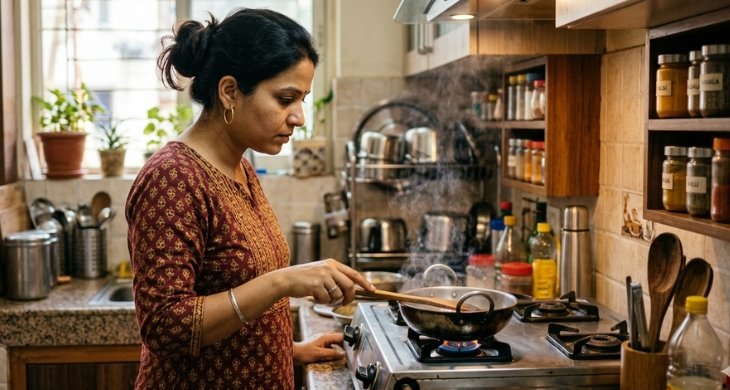
Most families in India have been buying the same cooking oil for years. Same brand, same size, same kitchen. Because it’s been told from generations.. Lets rethink!
Sign 1: Your Oil Starts Smoking Before the Pan Gets Properly Hot
You put the pan on the flame, add oil and within seconds smoke. You assume the flame was too high. You turn it down. But this keeps happening.
This isn’t a flame problem. It’s an oil problem.
When oil smokes, it’s not just burning. It’s chemically changing. The good fats are degrading and compounds called free radicals and aldehydes are being released into your food and your kitchen air.
What to do: Check the manufacturing date on your current bottle. Oil doesn’t last forever once opened. Store in a cool, dark place, away from the stove.
Sign 2: Your Food Feels Heavy After Every Meal
There’s a difference between feeling full and feeling heavy. Full is satisfied. Heavy is that sluggish, uncomfortable feeling that sits with you for hours after eating.
The quality of fat matters. Oils high in saturated fat used in excess can slow digestion and make meals feel denser than they should.
What to do: Track whether the heaviness happens more after certain dishes or after all meals. If it’s all meals, the oil is a strong candidate. Try reducing the quantity first, then consider switching.
Sign 3: Your Oil Smells Off When You Open the Bottle
A sour or paint-like smell when you open the bottle is a clear signal the oil has gone bad.
Fresh cooking oil has a clean, mild smell. Cold-pressed mustard oil has its characteristic sharp, natural pungency. Refined sunflower and soybean oils are largely neutral.
What to do: Smell your oil before you cook. If something feels off, trust that instinct. Buy in quantities your household finishes in 6–8 weeks rather than buying large to save money.
Sign 4: Your Food Has Stopped Tasting the Way It Used To
This one is subtle and most people don’t connect it to oil. But if your sabzi tastes flat, your tadka doesn’t have the same depth or your fried snacks don’t have that satisfying crunch and you haven’t changed your recipe, the oil is worth questioning.
Oil is a flavour carrier. It’s what carries the taste of your masalas, spices and ingredients into the dish. When oil is degraded, it stops doing this job properly.
What to do: Cook the same dish twice in a week, once with your current oil, once with a fresh bottle of a different variety. The difference in taste will tell you more than any label ever will.
Sign 5: You’ve Been Using the Same Oil for Everything
Using one oil for every cooking method: deep frying, tadka, sautéing and drizzling, is like using one shoe for running, office work and a wedding. It works. But it’s not optimal.
Different cooking methods require different things from oil:
- High-heat frying needs a high smoke point and stability
- Tadka and everyday sabzi benefit from oils with flavour
- Light sautéing and finishing neutral-tasting oil are best
What to do: You don’t need to overhaul your kitchen. Start with one small change, keep a bottle of cold-pressed mustard oil specifically for your tadka and dal and your regular refined oil for frying. Notice the difference in two weeks. You don’t need to become an expert in food science to make better oil choices. You just need to pay a little more attention to what’s already in front of you.
Ajanta brings you cold-pressed mustard oil, refined soybean oil and refined sunflower oil each made for a different job in your kitchen. Explore our range at ajantasoya.com/shop